

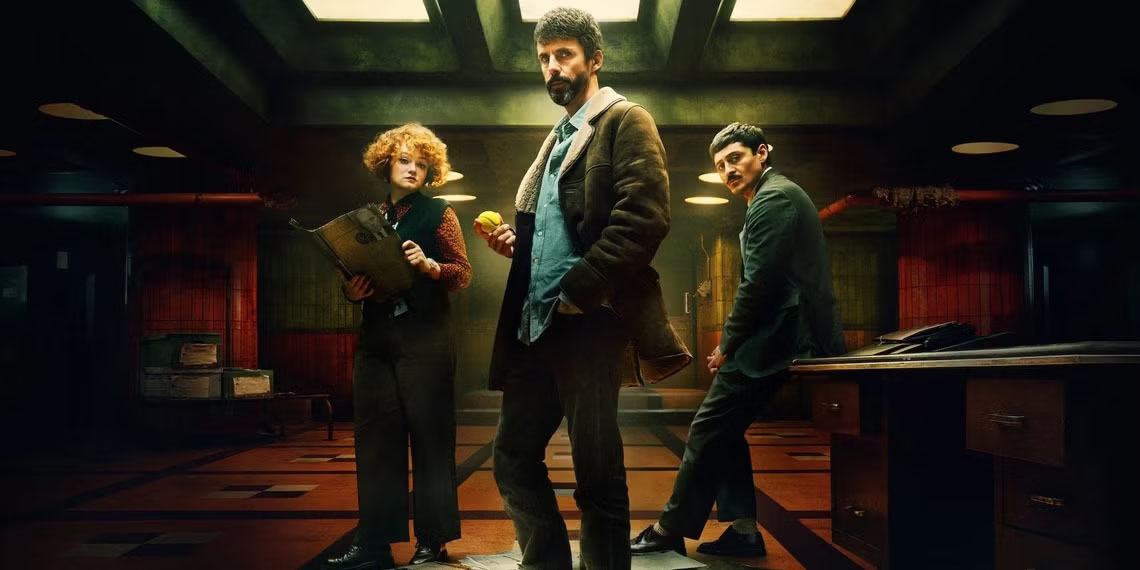
Dept. Q (2025, Netflix, Exec. Producer Scott Frank):
“Yes, the department actually comes under the auspices of the Danish Criminal Investigation Center, but we didn’t want the same people to be investigating the same cases all over again, so it was decided to establish an independent department, administered by the homicide division. It’s going to handle cases deserving ‘special scrutiny.’ But you know all about that.”
“How much funding was allocated?”
“Don’t quote me on the exact figure, but it’s somewhere between six and eight million kroner annually for the next ten years.”
Carl looked around at the pale green walls of his basement office. OK, now he understood why Jacobsen and Bjørn were so intent on exiling him to this no-man’s-land. Between six and eight million, he’d said. Straight into the pockets of the homicide division.
This was damned well going to cost them.
—”The Keeper of Lost Causes,” by Jussi Adler-Olsen
Sometimes a show is worth watching just to enjoy an actor doing something new; such is the case with Matthew Goode and Dept Q. With his patrician, hawk-like good looks and a high-toned rasp of a voice, Goode was born to play the handsome cad in period dramas, and he’s done so in everything from Brideshead Revisited to Downton Abbey. But every so often, he gets to tackle characters with more bite, sometimes literally: a dishy vampire in A Discovery of Witches, or his funny, pacy impersonation of Hollywood hustler Robert Evans in The Offer. Too often, though, these performances have been the sole highlight of otherwise unremarkable productions. (A Discovery of Witches, for example, is undone by sub-Twilight soap opera twists and a lead performance by Theresa Palmer that’s the very definition of a lead balloon.)
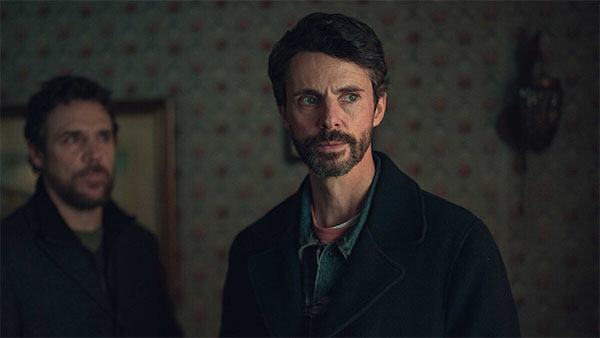
In Dept. Q, Goode once again departs his usual upper-class comfort zone, and to reinforce the point, the series’ title sequence depicts him in a prolonged primal scream. Armed with a bushy beard and the stare of someone who hasn’t had a good night’s sleep in about a decade, his Detective Carl Morck is a rumpled veteran whose acumen is only outclassed by his foul temper and contempt for the world at large. After a tragic unsolved shooting leaves Morck emotionally as well as physically compromised, he’s “promoted” by his disapproving boss Moira (Kate Dickie) to head a politically mandated cold case department housed in the forgotten bowels of Edinburgh police HQ amongst dusty floors, disused urinals and unkempt files. As far as dead ends go, one can’t get much dead-er, and in any other circumstance, Morck would be all too content to sit back and let the rest of his career pass him by. But when Syrian-refugee-turned-police-assistant Akram (Alexej Manvelov) is seconded to his unit and suggests they look into a four-year-old case involving the disappearance of barrister Merritt Lingard (Chloe Pirrie), the wheels are set in motion for a bit of redemption as well as a mystery that plays out on several tracks, as we flash back and forth between Merritt’s life prior to her disappearance and the current investigation into her whereabouts. Small spoiler (but not really, as this information is revealed by the end of the first episode): Merritt is very much alive and far from well.
Based on a long-running series by Danish author Jussi Adler-Olsen, Dept. Q goes heavy on the elements that have come to define Scandi-noir: forbidding milieus (in the show, a wintry gray Edinburgh and the Scottish isles are appropriate stand-ins for Copenhagen), convoluted death traps, maladjusted heroes and villains, hot-blooded revenge doled out in cold-as-ice fashion. But while Adler-Olsen’s novels are matter-of-fact, wry procedurals, producer/writer Scott (The Queen’s Gambit) Frank opts for more zing. In the books, Morck is a low-key grump; in the series, he’s an A-1 jerkoff, and Goode, relishing every put-down and withering glare, has no problem making him as unlikable (yet somehow sympathetic) as possible. “I don’t give a fuck, which means I don’t give a fuck,” he declares in one of his chummier moments, but Frank also picks away at the character’s vulnerabilities, most notably during his fraught interactions with his ex-wife’s son Jasper (Aaron McVeigh) and a press conference that turns into a panic attack.
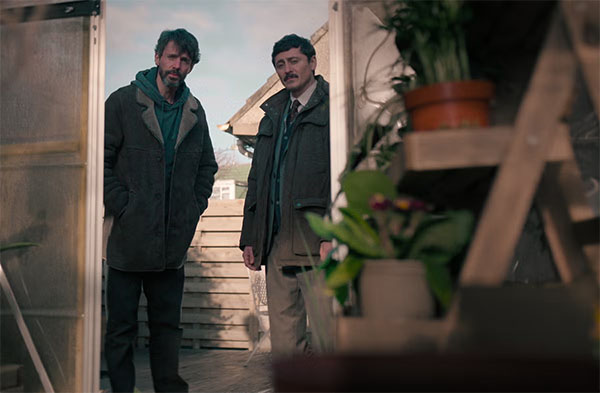
Shutting the fuck up is your best strategy right now, believe me.
—Carl Morck, “Dept. Q”
Dept. Q is tinged with a few Americanisms, particularly when Morck threatens those he interrogates with some not-so-legal outcomes—a move more appropriate for a maverick NYPD cop than a dogged European investigator. Morck’s budding romance with his psychologist (Kelly Macdonald) also gets flirtier than what’s presented in the books and comes off as a little try-hard, even if their feisty repartee entertains. But if these bits of dissonance (not to mention a few far-fetched twists) stray from the source material, Frank nevertheless mirrors Adler-Olsen’s measured pace as Morck and Akram trudge towards the truth, aided by Rose (Leah Byrne), a gabby DC with her own PTSD issues, and Morck’s buddy Hardy (a soulful Jamie Sives), who was paralyzed in the same shootout that injured Morck.
It’s clear that Dept. Q draws inspiration from Slow Horses; like Gary Oldman’s grizzled spymaster in Horses, Morck is in charge of unwanted misfits, and much of the fun in both series comes from watching these dyspeptic taskmasters peppering their subordinates with insults. But while the screwed-up heroes of Slow Horses often succeed in spite of themselves, Morck and his team are capable sleuths caught in a down cycle, damaged souls in need of another shot, and their faltering first steps towards camaraderie gives the show an emotional backbone that sees it through its slower patches. It also makes Dept. Q a far sight better than Frank’s other recent detective series Monsieur Spade (2024), which spoils its delectable premise (what if Dashiell Hammett’s Sam Spade retired to France after World War II and got himself embroiled in new mysteries?) with bewildering criss-crossing subplots and a misunderstanding of what made Hammett’s novels sing (more vicious hard-boiled attitude, less Gallic ennui).
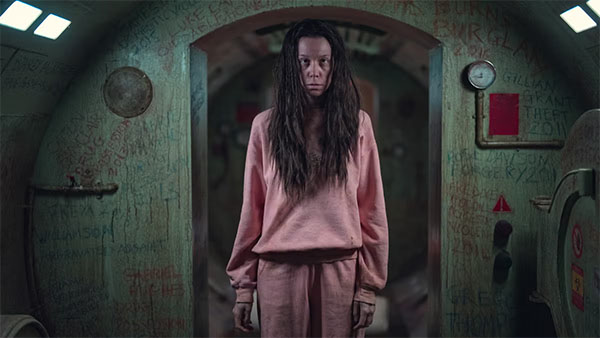
Dept. Q doesn’t accelerate to the finish line as much as it lopes there in its own good time, and if its central mystery isn’t as compelling as it might have been, Frank compensates by giving his actors the space to bounce acid witticisms off each other, with even the bit parts (Mark Bonnar as an untrustworthy prosecutor, Sanjeev Kohli as Morck’s slacker roommate) getting in their barbs. While Goode is the star on the marquee, this time out he’s only one of the series’ many strengths, as he often cedes center stage to his fellow actors with pleasing results. Pirrie matches Goode in bullheadedness and vulnerability, making for a strong presence in the flashbacks, but the show’s true secret weapon is Manvelov’s Akram. Mixing dry deference (“I am learning so much from you, sir,” he says with the straightest of faces after he witnesses Morck’s questionable methods backfire) with shocking bursts of violence that suggest he was something quite dangerous in his previous life, Manvelov all but steals the show, his soft-spoken intensity hinting at depths that will hopefully be mined in future seasons.
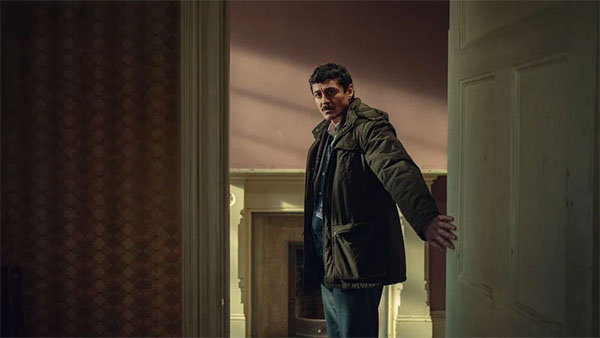
Setting up an ample amount of continuing plotlines, Dept. Q all but announces its intention to stick around for at least a few more seasons (with ten Adler-Olsen novels, there’s plenty to adapt), with more than enough juicy dialogue and characterization in these first nine episodes to whet the appetite for further developments. Dept. Q may lack the kick and surprise of a truly classic mystery, but in all other departments it has what one needs for a satisfying, long-running TV show; if nothing else, Goode’s amusing turn as Morck shows that it can pay off to give actors something different to do. Long may the grumpy inspector and his confederates reign. ■
