

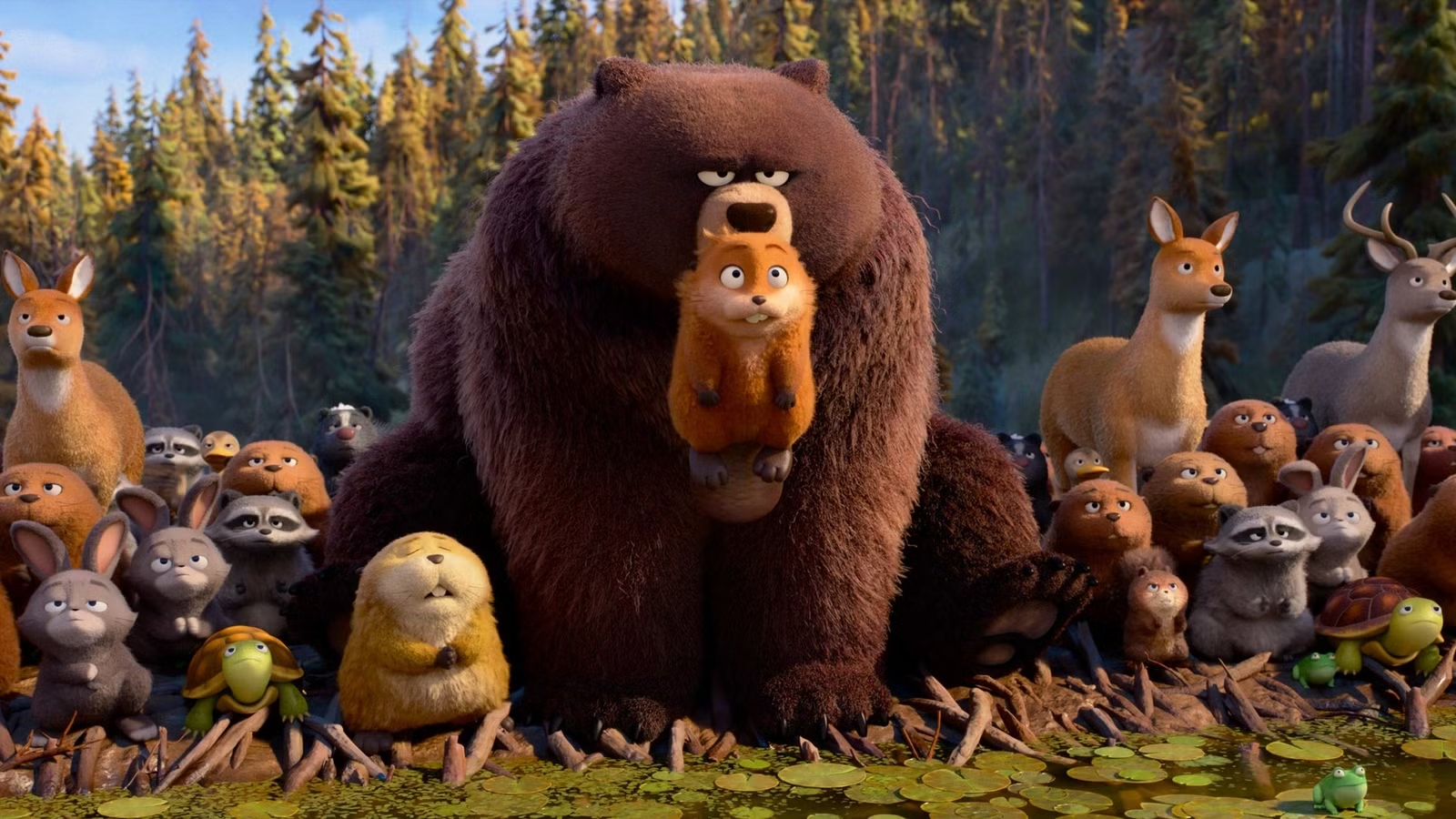
Hoppers (2026, Dir. Daniel Chong):
Pixar has always relied on a canny balance of art and commerce, where the cutesiness of it all (gotta sell those toy tie-ins!) supports rather than overwhelms the genuine wit and creativity on display. When they’re at their best, Pixar movies perform a kind of alchemy in which actual human emotions (the difficulties of growing up, fears of loss and abandonment) are refracted through child-like whimsy in a way that appeals to all age quadrants, whether it’s toys coming to life or a house escorted into the heavens by a phalanx of candy-colored balloons. Call them guilt-free family entertainment: the kind of movies parents are okay having their kids drag them to.
Lately though, that Pixar spark of life has grown more elusive. For every bona fide classic like Inside Out, there’s been a handful of lesser entries like Elio or Onward that feel over-familiar at best and rote at worst. Elio in particular is a perfect example of what latter-day Pixar has become: a breathtaking visual work that’s rickety on originality, plot mechanics and character. If Pixar’s founders were inspired by the storytelling of animators like Miyazaki, its new generation of creatives seems more jazzed by the prospect of creating gorgeous settings and gaga universes than the actual nuts and bolts of a well-told tale.
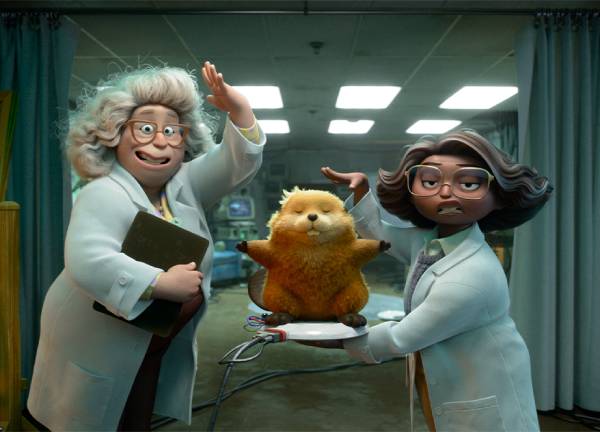
Hoppers feels like a semi-return to classic Pixar; there’s zaniness aplenty in its scenario, but it’s couched within recognizably human boundaries. The opening credits follow an electrical impulse as it courses through the innards of a circuit board, suggesting the lit fuse of a Mission: Impossible title sequence, but the start of the movie is anything but high-tech. Young Mabel (Piper Curda) is a troublemaker, going to extreme lengths to protect animals from thoughtless classmates, but she finds her happy place when she communes with nature alongside her feisty grandma (Karen Huie). “You just have to be very still and watch and listen,” Grandma advises her — surely a useful mantra for our current harried world.
Alas, this idyllic interlude is all too brief, as we skip forward a decade later, with Grandma’s beloved glen threatened with demolition to make way for a highway overpass thanks to Mayor Jerry (John Hamm, sending up his slick Mad Men image). The title of the movie refers to the woodland creatures that Mabel looks after as well as the ultra-special-secret robotic animals her college professor Dr. Sam (Kathy Najimy) is using to observe critters in their natural habitat, but it’s Mabel who’s hopping mad. Bent on saving her glade, she “hops” her brain waves into the shell of a robotic beaver and takes off in search of natural inhabitants to save the glade from disaster. (The film is fully aware of its borrowed sci-fi concepts: “Guys, this is like Avatar!” Mabel exclaims.)
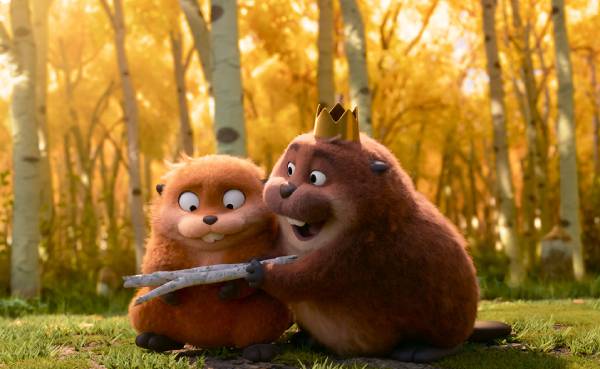
You can guess at the general course of events from there, as Mabel seeks help from a host of quirky forest denizens, including a zonked-out beaver (Eduardo Franco riffs on his stoner from Stranger Things), a nonplussed bear (Melissa Villaseñor), a beaver king (Bobby Moynihan) who’s more of a get-along kind of fella than the revolutionary leader Mabel requires, and a “Great Council” of representatives from all species, including birds, toads, snakes and ducks, with an imperious Meryl Streep lording over all as a true Monarch Butterfly. Even if the ultimate outcome is never in doubt, give credit to director Daniel Chong and his co-writers for injecting some surprising turns, as when the Great Council decrees that the best solution to the problem is to “squish” Mayor Jerry, setting off a breathless third act stuffed with chases, body switcheroos and aggressive slapstick. In the process, Mabel learns a thing or two about the animal community, including their predilection for morning calisthenics, or erecting a dam to the rhythms of Loverboy’s “Working for the Weekend” (an obvious needle drop, but a fun one).
If this marriage of cute critters and high tech sounds like a surefire winner, you’d be half-right. As per usual, the film is beautifully animated, with colorful flora and fauna popping from the screen, and even though the humans and animals have the standard rubbery, friendly Pixar look, they’re rendered with more loving detail than ever, from the liver spots on the cheeks of Mabel’s Grandma to the random frizzes of hair that poke out of Dr. Sam’s head like static shocks. The forest creatures’ “pond rules,” which include “Don’t be a stranger” and “We’re in this together,” tie the movie’s themes into a neat bow, with the usual Disney-esque homilies about believing in yourself and trusting others thrown in at regular intervals.
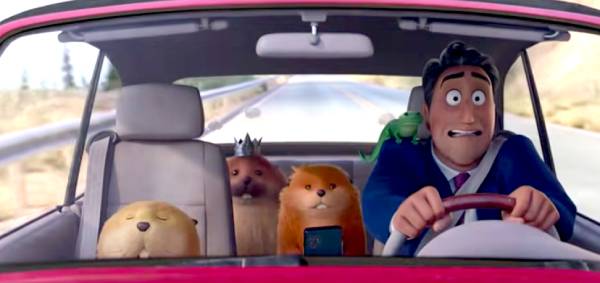
But if the packaging of Hoppers is top-notch, the contents are less so. Frantic and frenetic, the movie is made for an attention-deficit audience, as it hurtles from story points to set-pieces with little room for a breath, let alone nuance. This herky-jerk approach has its benefits: the better gags, like the beavers having fun with emoticons on Mayor Jerry’s phone, or seagulls dragging an alarmingly chipper killer shark (Vanessa Bayer) through the air, have the throwaway insouciance of an old-time Looney Tunes cartoon. Though the film is often more excitable than exciting (Mark Mothersbaugh’s busy soundtrack doesn’t help), it at least strains to provide maximum bang for the buck, and the edgier moments have some bite, especially when Streep’s entitled pupa offspring Titus (Dave Franco) “hops” into a robotic version of Mayor Jerry, contorting himself in all directions as he spews self-absorbed Gen Z invective to the masses.
In the face of such hubbub, Hoppers‘ gestures towards rapprochement and harmony—”Everyone’s good deep down,” the king beaver reassures Mabel—feel undernourished, and all the try-hard pyrotechnics of the finale, wherein a forest fire rages, robots and doppelgangers smash and explode, and Mabel pulls out some last-second heroics, can’t camouflage the fact that the movie lacks the patience to give its characters much of a chance to make an impression, let alone flesh them out. The best Pixar movies find time to emotionally devastate when they’re not having fun—the opening of Up or the departure of Bing Bong in Inside Out, for example. No such moments ground Hoppers, and all the good-hearted platitudes about making a difference and listening to others can’t compensate for their absence.

Still, one can’t be too hard on Chong and crew; in a world of disposable family entertainment, Hoppers proves that Pixar can still create animated features that can charm without bypassing intelligence entirely. If the film is minor-key Pixar rather than a movie that will stick to the memory, it’s just inventive enough to qualify as the kind of guilt-free entertainment that parents and children can still respect after leaving the cinema. And maybe a Pixar-like catharsis can be found in that: as their films gently remind us, one can’t go back to the good old days, but one can still have fun. ■
