

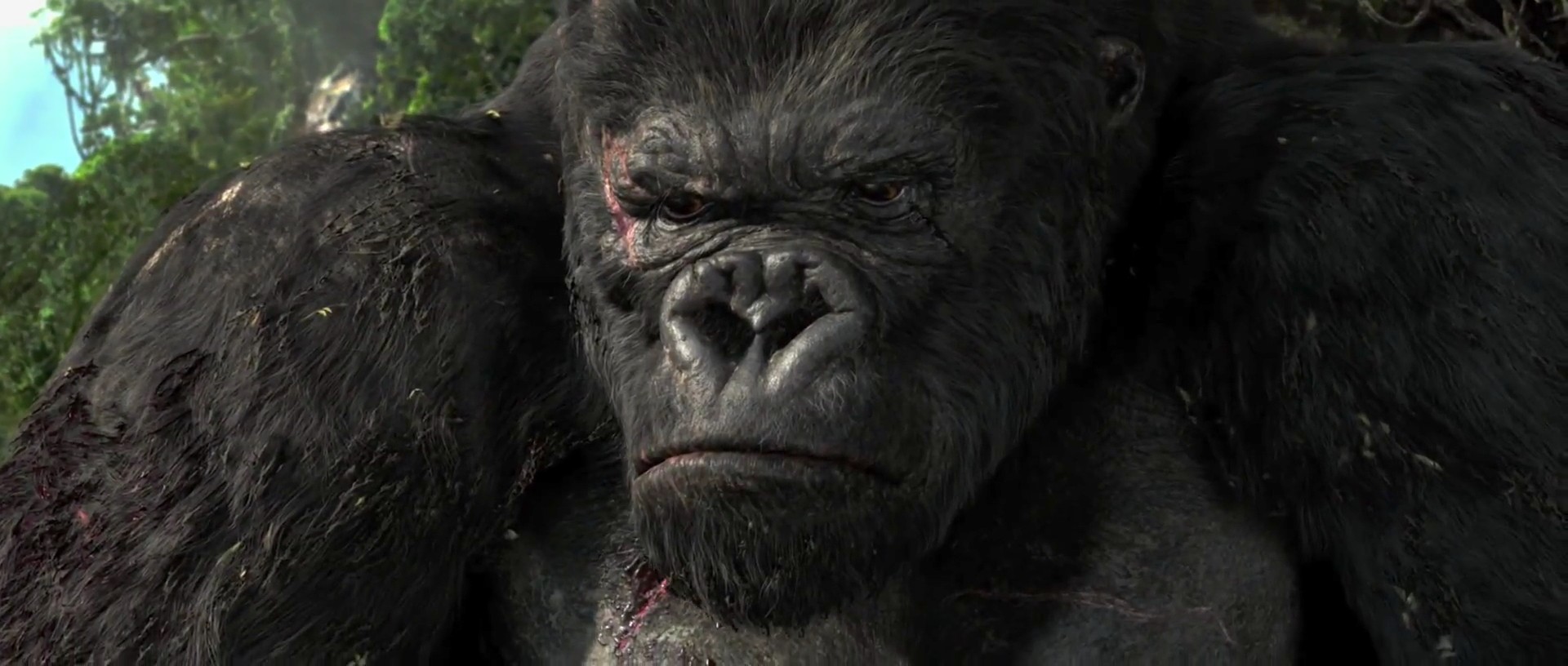
Peter Jackson’s King Kong (Dir. Peter Jackson, 2005):
Beware the film (or any enterprise) that features the maker’s name prominently above the title. Think M. Night Shyamalan’s The Village. Think Wes Craven’s Nightmare on Elm Street Part 4. Think Martha Stewart’s anything. Once you’ve made it, once you’re box office boffo and the very utterance of your name sends movie geeks ashiver, then comes the follow-up movie, with its attendant indulgences, the arrogance, the too much of everything. Before you know it, you’re raving randomly about some B-grade horror movie (i.e., Quentin Tarantino and Wolf Creek). Or worse yet, you surrender to the lure of standard Hollywood product (i.e., the trailer for Spike Lee’s latest offering, Inside Man, which reeks of normalcy). Forget about roads paved with good intentions — these are expressways lathered with good old-fashioned hubris.
 Peter Jackson avoids these roads — just barely — in his newest tale, titled, ahem, Peter Jackson’s King Kong. In keeping with the extravagances allowed to a hit filmmaker, Jackson goes for a “more is more” policy; where the original Kong (1933) clocked in at a fast-paced hour and a half, this one doubles the length, but instead of extra flab, this one is all muscle, like a steroid-infused bodybuilder. If ever there were a subject ripe for hubris, this is it, but if you’re going to go over the top, why not go right to the apex of the Empire State Building?
To be fair, the first Kong was a seminal event in Jackson’s childhood, and we can’t begrudge him the right to pay tribute to the old classic with modern flair, and even if the film itself is pure geek-out, the outpouring of one man’s kid-like fantasies, he has the good grace to bring us in on the fun most of the way.
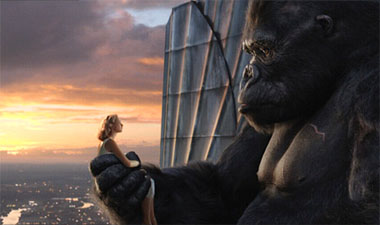 The very idea of Kong, as established in the original, is a collision of Boys’ Own Adventure (with its prehistoric creatures, uncharted isles, and hostile natives), with not-so-subtle riffs on white male anxiety over miscegination and black dominance (the latter is certainly debatable — for spirited arguments on both sides of the coin, see here). Jackson, rather than updating these motifs as John Guillerman did in his version of Kong (1976), charges full-bore into them, preserving the primal appeal of the source material. We are back in 1933: New York hustles and bustles, the natives are fearsomely native (and just as ready to pilfer white women), Kong takes on the biggest, baddest dinosaurs available, and Naomi Watts (as Ann Darrow) shrieks with the best of them.
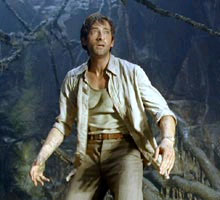 But Jackson is no xerox machine, cranking out carbons of the past. As a filmmaker, he has established his own unique take on the world as a charnel house where the dessicated and the creepy-crawly are mere inches away, where old-fashioned emotion and melodrama are stretched into hyper-operatic realms, where every moment of repose is overwhelmed by assaults of digitally-created horrors and equally queasy camera zig-zags. The central section of Kong, set amongst the unrelenting dangers of Skull Island, is the embodiment of this style, and no surprise, it’s the best part of the movie. Jackson may steal from Spielberg’s Jurassic Park and Indiana Jones pictures, but his pulverizing, no-rest-for-the-weary approach is all his own. Kong doesn’t get to battle just one dino, but three at once, trading blows and plummeting down chasms in a ceaseless flurry of movement. Heroic Jack Driscoll (Adrien Brody) doesn’t fight off a single giant spider, he combats a whole hoard of them. Every moment of suspense or grandiose special effect is lingered over, wrung like a wet towel. This would be deadly if your typical hack was at the helm, but Jackson has learned a thing or two from his Lord of the Rings cycle about pace and movement. For such a heavy-handed director, his work is fleet and free of smugness. He may be pleased with his creations, but he never assumes the audience is, and with showman instincts, he keeps his three-ring circus moving along, dashing from one setpiece to the next. It’s popcorn, but like other great mainstream entertainers, Jackson knows how to supply the pop.
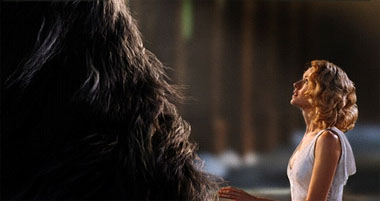
Where it goes wrong is when Ann Darrow and the King get together. Watts is a fine actress (I still say her turn in Mulholland Drive will stand as one of the best acting jobs of the decade), and she has a grand time conveying her character’s pluck and heart, even when the script makes her the butt of the joke. She’s at her best in her casual interplay with the beast, as when she hoofs it vaudeville-style to amuse him. But things get sticky once fear and respect burgeon into love, and Jackson strands her with loving close-ups of her tear-stained cheeks, bathetic looks exchanged between girlfriend and apefriend rendered in slower-than-slow motion. We’re meant to get caught up in the sweep of doomed love, but Jackson is nowhere near as dexterous with human drama as he is with sound and fury, and his script (co-penned with Fran Walsh and Philippa Boyens from Rings) offers little beyond some clunky foreshadowing (“Nothing good ever lasts”). We can buy Watts’ admiration and affection for the big man, but is it possible to buy the prospect of true love? Not with the hokum of a swooning woman and a guy in an ape costume (even if the costume is exquisitely animated, and acted by Andy Serkis). By the time the Empire State finale thunders in, with weepy-eyed farewells and death scenes that reach a crescendo of Shakespearian simian pathos, you may very well wonder: Is this really that tragic? I just want to see him bust up more airplanes. So beware, Mr. Jackson — you escaped the curse this time, but you best get a handle on this grand emotion thing.
