

Godzilla Minus Zero (2026, Dir. Takashi Yamazaki)
Rare is the sequel that outdoes the original. Usually the impulse is to escalate—go bigger, louder, longer—and in the process, what once was fresh begins to grate or just runs out of steam. And when you’re dealing with the tumescent kaiju genre, where the monsters already start big, going too big often results in cartoonish extremes and diminished fun, like a balloon popping and deflating.
Godzilla Minus One (2023) rebooted and revitalized the Godzilla franchise not by going big, but by going lean. In his brief appearances, the Big Guy packed a punch, but the modestly budgeted movie struck a chord because of its stripped-down approach, its emphasis on drama as well as special effects, and its subtle parallels between the irradiated monster and a scarred post-World War II Japan. Most of all, Minus One found crossover appeal thanks to the humanity at its core, with underdog heroes who were easy to root for: guilt-ridden kamikaze pilot Shikishima (Ryunosuke Kamiki), shambling scientist Noda (Hidetaka Yoshioka), and reformed pickpocket Noriko (Minami Hamabe). By movie’s end, Godzilla‘s fate didn’t matter as much as Shikishima and his comrades finding well-earned redemption, and this stirring combination of populist entertainment with vintage creature-feature theatrics led to worldwide popularity and the first Oscar ever awarded to a Godzilla picture (for VFX).
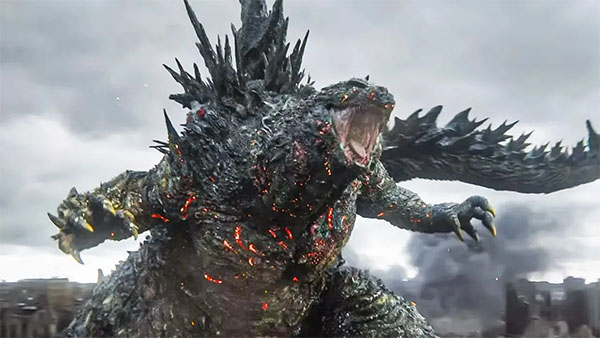
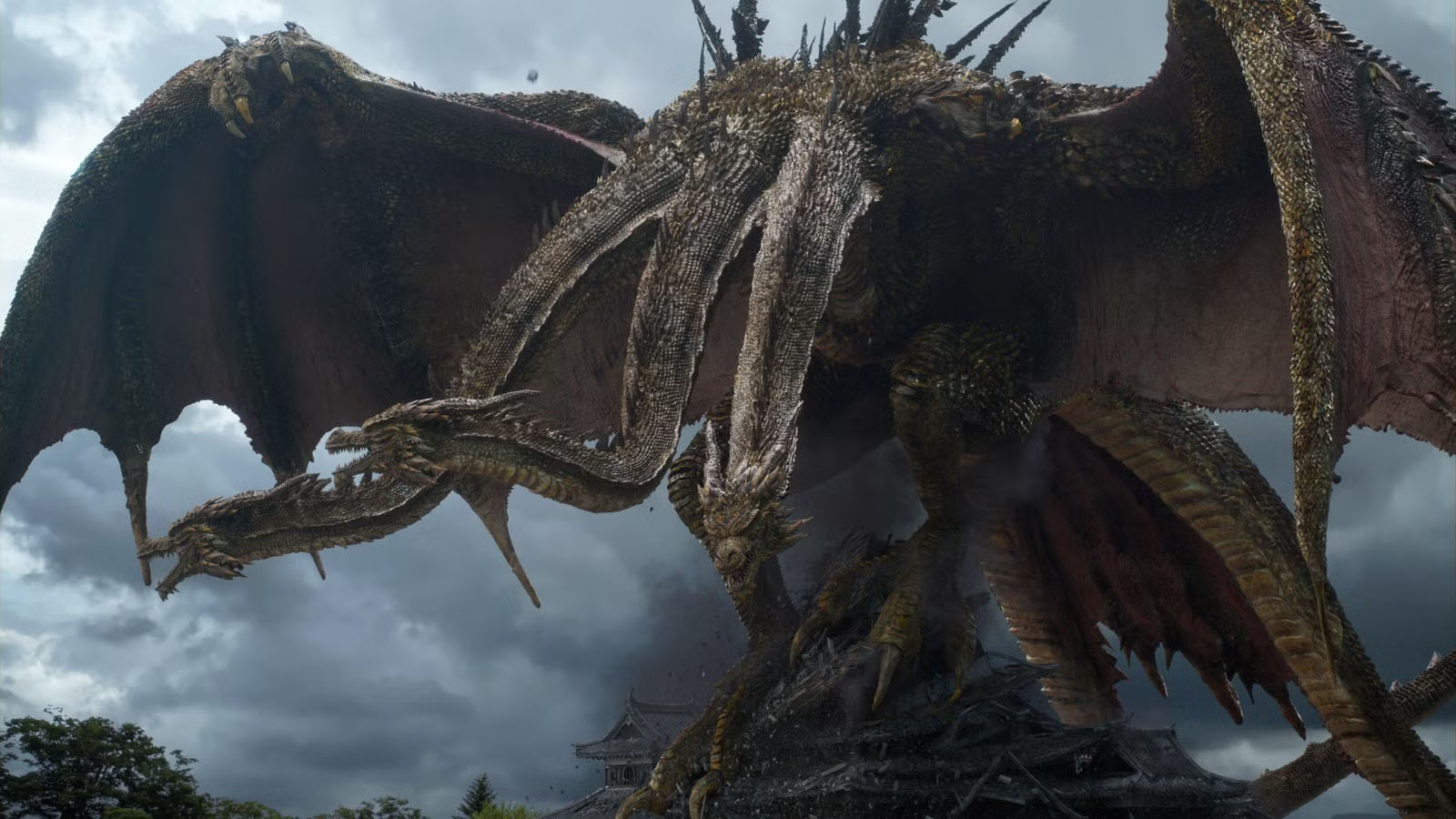
Such success all but mandated a follow-up, which comes in the form of Godzilla Minus Zero. A busier, messier affair than Minus One, it doesn’t escape the pitfalls of sequelitis, but if it lacks the emotional resonance of its predecessor, it still delivers more fun than most modern monster epics. From the first frame the stakes are amped up as an even more dangerous kaiju arrives to terrorize Japan: Ghidoresh, a dragon-like monstrosity hatched from a fallen meteorite. Ghidoresh’s opening attack is scored with swelling strings that riff on Wagner’s “Ride of the Valkyries,” and like a Götterdämmerung with wings, it levels the city of Matsumoto within minutes. It’s up to Noda, now head of Japan’s Disaster Response Bureau—”Confronting giant monsters is our real mission,” he intones gravely—to combat the menace, with the help of an occupying U.S. military who has its own secret aims. Soon enough Shikishima is drawn back into the fray, compelled to defend the lives of all Japanese people under threat, including his adorable moppet of an adopted daughter Akiko (Sae Nagatani).
Like Minus One, Minus Zero is sparing with the deployment of its kaiju, but when they take center stage the film takes flight, especially when Shikishima takes to the skies. Director Takashi Yamazaki originally gained fame for The Eternal Zero (2013) and he brings the same adrenalized, fear-drenched charge to Minus Zero‘s aerial sequences, as Shinzan and Sky Rider planes attack, dodge and flee Ghidorah, the monster alternately majestic and brutal in its movements. The special effects still have a scaled-down feel to them (the film’s budget is just a smidge larger than its predecessor’s) but plenty of moments bring shock and awe: Ghidorah’s anti-grav blasts sending houses and people skyward, Shikishima forced to fly through the maelstrom, or when Godzilla and Ghidorah come to grips in a flurry of torn-off limbs and death rays.
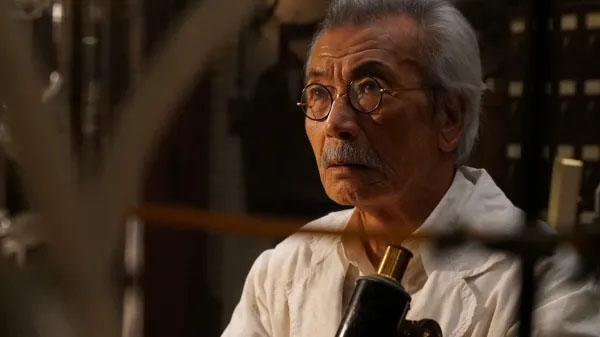
“Something scary’s coming,” whimpers Akiko early on, and the R-rated action in Minus Zero (not to mention the increased casualty count) flirts with true horror, with the scariest bits involving Dr. Murakami (Min Tanaka), an atomic bomb survivor from Hiroshima. A flashback to the aftermath of the bombing is wrenching enough, but the film’s most chilling moment comes when Murakami imagines Godzilla under his control, unleashing nuclear apocalypse on the denizens of New York City, the professor’s face frozen in an ecstatic rictus grin of revenge. Murakami’s journey from embittered avenger to forgiveness is the closest the film comes to the catharsis of Minus One. The rest of the returning cast, as likable as ever, all get moments to shine as they sacrifice themselves for the common good, with Hamabe’s Noriko getting more to do, courtesy of a convoluted subplot involving her ability to “vibe” with Godzilla after being infected by the big lug’s cells. The original Godzilla movies ramped up to silliness rather quickly, evolving from an allegory on post-nuclear Japan to far-out hokum involving ever more out-there creatures, alien civilizations and cute fairies, but Minus Zero sticks to the more grounded (if there can be such a thing with a Godzilla movie) tone set by Minus One, with the characters more convincing than the scientific gobbledegook they’re forced to get passionate about.
Most of Minus Zero‘s overlong 135-minute running time is devoted to strategems and plan Bs, along with ponderings on larger concerns, such as the morality of using a monster to kill a monster and the potential legacies left for future generations. If all these plot mechanics result in a movie that’s more sluggish and less humane than the previous entry, Minus Zero still earns points for at least attempting to be thoughtful, even as it hurtles into a final knock-down battle in what’s left of Tokyo’s Ginza district, both Godzilla and Ghidorah ripping, tearing and blasting at each other, the two monstrous monsters regenerating after every killing blow, like zombies that won’t stay dead.
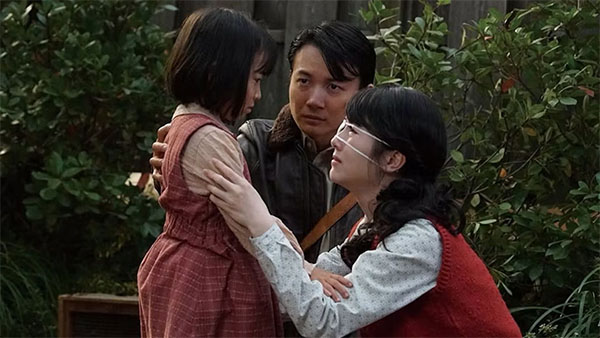
Minus Zero‘s climax alternates between melodrama and confusion: scenes in which Shikishima and Noriko leave Akiko at a war orphan home for her own safety are touching at first but soon get bathetic as the camera lingers on Akiko’s wails of abandonment, drawing out the pathos for all it’s worth. Meanwhile, the kaiju grudge match at the climax ends on an unresolved note, with Ghidorah’s fate never properly shown onscreen and Godzilla skulking back into the ocean unabated, now a target of a U.S. military eager to exploit his destructive power. Even with these missteps, Yamazaki shows he still has a sure hand with the actors, and despite the occasional overflow of emotion, the more somber mood is appropriate for a dark middle chapter in what will surely be a trilogy.
Minus Zero upends Minus One‘s message—whatever happens, survive and live on for the sake of others—by concluding with our heroes dead, captured or on the run, the future of Japan very much in doubt. But in the meantime, there is always Godzilla, coming and going as he pleases, leaving beautifully savage destruction in its wake. If Minus Zero doesn’t scale the same heights of the first movie, it’s still a beefy slice of entertainment that confirms that after 70 years in the cinema, the King of the Monsters still has some life yet. ■