

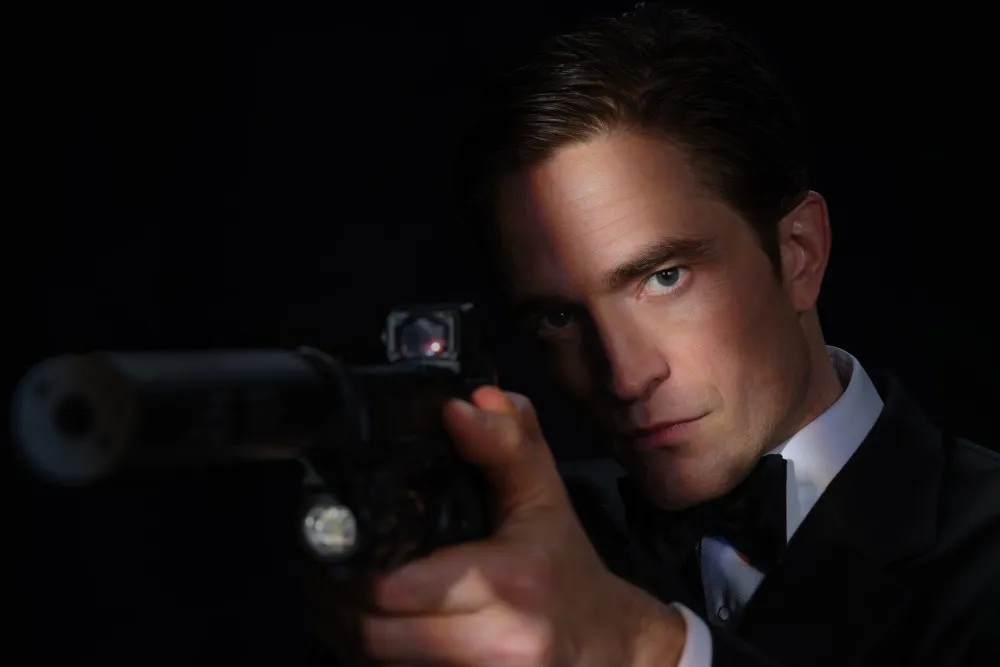
I was raised with James Bond. I love James Bond movies. I would love to do a James Bond movie one day. Action is very cinematic. I’m not someone that loves dialogue – I am someone that loves movement. Action, if it’s well done, can be very poetic and meaningful.
Denis Villeneuve, 2015
Since his theatrical introduction over 60 years ago, James Bond has been one of the most iconic characters in filmed entertainment. We are grateful to the late Albert R. Broccoli and Harry Saltzman for bringing James Bond to movie theatres around the world, and to Michael G. Wilson and Barbara Broccoli for their unyielding dedication and their role in continuing the legacy of the franchise that is cherished by legions of fans worldwide. We are honoured to continue this treasured heritage, and look forward to ushering in the next phase of the legendary 007 for audiences around the world.
Mike Hopkins, head of Prime Video and Amazon MGM Studios
During a company meeting…an Amazon employee admitted her own misgivings.
“I have to be honest,” she said. “I don’t think James Bond is a hero.”
The room went silent.
The Wall Street Journal (December 19, 2024)
In his first six decades on the big screen, James Bond has been a “family business,” with producer Albert Broccoli and his offspring overseeing the franchise for the vast majority of that span. One can quibble with some of the group’s decision-making (Blofeld as Bond’s foster brother? Um, okay) but one can’t deny that Broccoli, his daughter Barbara and stepson Michael G. Wilson have brought an abiding affection to the character and his world. In contrast to our current era of soulless mega-media corporations and their mega-film properties (e.g., Star Wars, Marvel and their ilk), Bond movies have been a more bespoke affair attuned to the Broccolis’ vision rather than viewer algorithms and marketing formulas. If this approach has resulted in a few flawed entries and the occasional avoidance of risk, the fact that a hero of Cold War lineage has remained relevant (and lucrative) in the modern day is a credit to the clan that has been his caretaker.
But unlike diamonds, film empires aren’t forever, and MGM, the embattled co-producing partner of the Bond movies, was swallowed up by Amazon in 2021. A franchise that prided itself on its independence was now in the clutches of one of the biggest corporations in the world and under the wing of Jeff Bezos, whose obscene wealth and limitless thirst for power would be the envy of any Bond villain. Needless to say, the new partnership was rocky from the start. Ever protective of Bond, Broccoli and Wilson still had creative control but now had to answer to studio heads obsessed with terms like “content” and “data-driven.” Those same execs envisioned a more diversified “Bond universe”: not just movies but TV shows and spinoffs that would bring more eyeballs to Amazon Prime Video (never mind that it would risk diluting the Bond brand). “The Moneypenny Chronicles,” anyone? Maybe an “orphan Bond” series that covers 007’s pre-007 days, or a show starring 002? And how much Amazon-ness will infect the product? Will Q pull up in an Amazon van to deliver Bond’s latest gadgets? Will a sponsored ad pop up every time a luxury item appears onscreen during season 2 of Bonded to Travel: 007’s Favorite Vacation Getaways?
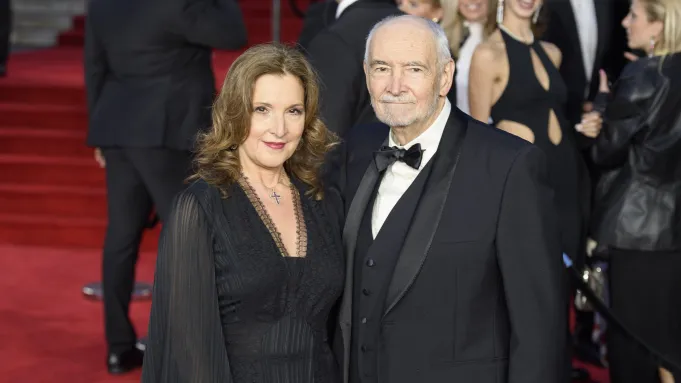
Speaking of vision, even Broccoli and Wilson had no clue where to take Bond next. They had reinvented the character with Daniel Craig, stringing together a five-film cycle that gave their hero a clear start and finish, but whether due to uncertainty or exhaustion, they lacked a suitable follow-up idea. As 2021 stretched into 2025 without even a whisper of a new Bond film, gossip abounded. An Amazon exec’s conception of Bond (i.e., “I don’t think James Bond is a hero”) was an affront to Broccoli and Wilson; Broccoli and Wilson had reached “the end of the road” creatively; Broccoli and Wilson were butting heads with Amazon’s head honchos, with Broccoli calling the execs “fucking idiots.” None of this had to be thrilling for Amazon, who had paid over $8 billion for the privilege to produce Bond and had yet to get any sort of return on the investment.
Then came the shocker: early in 2025, the Broccolis capitulated, cleaning their hands of Bond and signing over creative control to Amazon. (If the rumors are to believed, Blofeld, er, I mean Bezos pushed for Barbara Broccoli’s ouster.) For the first time in 007’s cinematic history, his fate is now entirely in the hands of a major film studio. How to regard this news is a matter of perspective. If you’re not a fan of latter-day Broccoli Bond, you might see an opportunity for re-energization and reinvention; if you’re leery of cookie-cutter blockusters watered down by focus groups and grifters masquerading as creative visionaries, you might fear Bond will be reduced to a cash cow, milked dry with spin-offs, ancillary content and assembly-line productions, to the point where even the prospect of a new Bond film at the theaters loses its luster (see: Star Wars and Marvel). Amazon wants a successful franchise of its own in the worst way, yet its previous swings at big-budget properties (The Rings of Power and Citadel) have been costly misfires. Will its Bond be more audience-friendly and “enlightened” (if that isn’t a contradiction in terms) and a little less anti-hero?
It’s worth noting that Bond movies subsist on change, and sometimes even thrive on it. Sometimes the changes are obvious, such as when a new actor assumes the mantle of 007, and sometimes they’re more subtle, whether it’s our hero ditching his cigarette habit or M’s office furniture being tweaked. A shakeup isn’t necessarily a bad thing; even the most lenient reviewer can admit that the Broccolis have struggled to keep Bond fresh, often retreating to the same formulaic elements. Perhaps a new player like Amazon can rediscover that elusive bit of magic that separates top-shelf Bond from business as usual. On the other hand, much about Amazon’s output can be described as business as usual: stolid, plot-heavy, anonymous action thrillers, where you’d be hard-pressed to differentiate Jack Ryan from Jack Reacher from James Reece. Bond films are meant to be more than that. They’re about the vibe, the technicolor exoticism, the enigmatic nature of Bond himself.
At least Amazon has spared no expense thus far. New producers Amy Pascal and David Heyman are a formidable duo, boasting experience in studio oversight (Pascal is the former chairman of Sony Pictures and co-produced the first four Craig Bonds) and franchise management (Heyman produced the Harry Potter movies and is plugged into the British film production scene). They’ve also shot for the moon by hiring Denis Villeneuve, the hot director du jour, to helm the next Bond film, a choice that has received almost unanimous kudos. (Some fans will disagree, but as you’ve learned from my book, Bond fans will disagree about almost everything.) Villeneuve might be the most high-profile director to tackle a Bond movie yet, and his bona fides can’t be disputed, from hard-hitting thrillers (Sicario) to thoughtful sci-fi (Blade Runner 2049 and Arrival) to big-time tentpole movies (the Dune trilogy). If there’s a Venn diagram intersection between respected prestige filmmaker and franchise nerd cred, Villeneuve sits smack in the center.
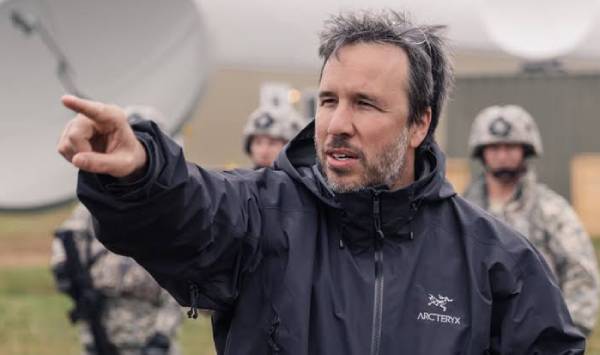
Yet the question remains: Is Villeneuve the right man for the job? As sophisticated and intelligent and visually striking as his films are, they tend towards solemnity; will that ponderousness creep into 007? Bond has always walked the fine line between seriousness and play; indeed, many have criticized the Daniel Craig era for leaning too far into the former. Based on past evidence, Villeneuve has been cagey about where his preferences lie. He’s mentioned that his Bond fandom goes back to the Connery days, and added in a 2021 interview, “There’s nothing like a good James Bond to cheer you up.” Sounds like someone who understands the history of the series and might bring some fun to the party, but he’s also cited Casino Royale and Skyfall as his favorite Bonds, which would seem to indicate that something more serious is in store.
That impression has been reinforced by the hiring of Steven Knight to write the screenplay. The creator of hard-hitting historical shows like Peaky Blinders, Taboo and SAS: Rogue Heroes, Knight is most comfortable with lowlifes and misfits who solve their problems with a good stovepipe to the head. Will he bring the same street-level swagger to 007? Some lamented that Craig’s Bond was portrayed as a hard case; Knight’s version of that character may take it a step further. At least Knight seems to understand what he’s getting into, based on a September 2026 Deadline interview in which he reflected: “The thing with Bond is it’s its own universe, and it’s its own franchise. So there are certain rules. I mean, obviously you have to move it along, but I love where it sits. I love that it’s British. I love that it’s not DC or Marvel … So I feel a responsibility to the text.”
If we’re yet to fully decipher the true intentions of these newcomers behind the scenes, we can at least speculate about what the man playing Bond will bring to the part. This time around, a handful of actors were rumored as finalists, including Callum Turner, who comes the closest to a Knight-style hero in his hardscrabble looks and persona; Jack Lowden, a more tightly-wired sort who plays a wannabe-Bond in the darkly funny Slow Horses; Josh O’Connor, who starred opposite Craig in Wake Up Dead Man and brings acting chops and vulnerability to his roles; and Nicholas Hoult, the smoothest of all the candidates, with a wide range of parts from prissy royalty in The Favourite to Lex Luthor. All of them would have been fascinating choices for Bond, but they were all bested in the casting process by the biggest name among them: Robert Pattinson.
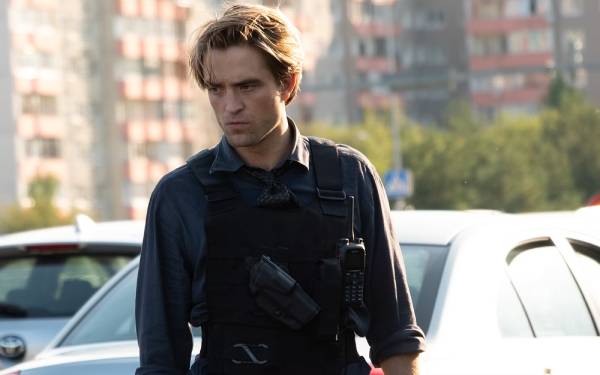
Undeniably the most famous actor to ever land the role—Connery and Lazenby were relative unknowns, Moore and Brosnan were known more as TV actors, Dalton was a Shakespearean heartthrob, and Craig a gritty indie character actor—Pattinson has graduated from teen dream in Harry Potter and the Twilight series to more eccentric roles in his adulthood. Like Craig, he’s adept at playing slimy arseholes—he steals the show in Christopher Nolan’s The Odyssey as a suitor with ill intentions—while also bringing the quirk to heroic figures. Witness his emotionally scarred, quavery take on Bruce Wayne in The Batman, for example, or his louche secret agent in Tenet, like a Bond after a few extra martinis. Even his physical appearance is chameleon-like, with the ability to snap from matinee-idol handsomeness to something more hooded and reptilian (dare we say vampire-ish?) in the wink of an eye. The fact that he’s as sure a bet at the box office as there is these days probably didn’t hurt his candidacy, either.
More epicurean and sardonic than Craig, moodier than Brosnan and Moore, and more tricksy in his demeanor than Connery, Pattinson will no doubt bring something new to the role, but what that “something” is, and in what proportions, remains a mystery, which is the way it should be, because for all the quips and props and backstories, James Bond remains who he is: a specter, an assassin in the shadows who’s comfortable inhaling the spotlight, a man of the world and beyond it with little in the way of possessions or scruples, save loyalty to King and country and getting the job done. With cinema obsessing over characters’ inner damage more than ever, Bond remains a blissfully outward creation, the sort of mythical figure that invites audience projection and interpretation. No matter how you try pinning him down, no matter what era you find him in, he remains a character unto himself, both recognizable and unknowable.
“James Bond will return.” At various points in this franchise’s history, those words have been a promise, an expectation, and sometimes even an iffy proposition. Now with Amazon in charge and hiring the starry likes of Villeneuve and Pattinson, we can at least rest easy that James Bond will return, again and again, for the foreseeable future as an event movie franchise. But what lies ahead for 007 and his cinematic universe in general? It’s a cliffhanger that ranks amongst any that Ian Fleming ever created. It will be intriguing to see how Bond’s new incarnation stacks up against what has come before, and whether the kernel of what Fleming created seven decades ago persists. ■
